
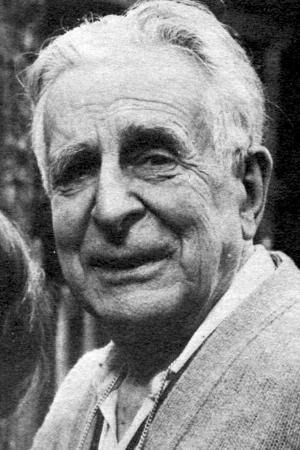
Cartoonist, producer, animator.
French animator and producer born in Kazan, Russia, on April 18, 1901. Alexandre Alexeieff went to Cadets School and later attended the Naval Academy in St. Petersburg. He emigrated to France in the aftermath of the Russian Revolution, settling in Paris in 1919. There he studied painting and design, and embarked on a promising career as a book illustrator and stage designer.
In 1933 Alexeieff saw Fernand Léger’s fabled avant-garde film of animation Ballet Mécanique, and under this influence he made a cartoon short, A Night on Bald Mountain, using Modest Moussorgsky’s music. This film was based on Alexeieff’s famous “pin-board technique”—patterns and images created by means of rows of pins fastened to a board and moved either mechanically or by hand. Turning his attention to puppets, Alexeieff then produced La Belle au Bois Dormant (“Sleeping Beauty”) to music by Francis Poulenc. He also made numerous cartoon commercials for products ranging from perfume to underwear.
During World War II Alexeieff went first to England and then to the United States. With the help of his second wife, Claire Parker (whom he had married in 1941), he experimented further with the pin-board technique and made several films for the National Film Board of Canada, the most notable being En Passant, a delightful romp through Canadian folk songs. Returning to France after the war, Alexeieff again took up commercial animation but later made three impressionistic films with Georges Violet: Fumées, Masques and Nocturnes (1951–54).
Alexeieff then came back to the pin-board, producing Le Nez, (“The Nose,” 1963), a film version of Nikolai Gogol’s famous tale of a man haunted by his own nose. Turning to Moussorgsky’s music once more, he directed Pictures at an Exhibition. Dreamy, almost ethereal, this last effort was greeted almost as much with incomprehension as with praise when it was released in 1971. Alexeieff has been the recipient of countless honors over the years; his cartoons (he prefers to call them “animated engravings”) have won many international awards. He himself has been called “the Einstein of animation,” and he has been a perennial member of juries at animation festivals around the world.

